
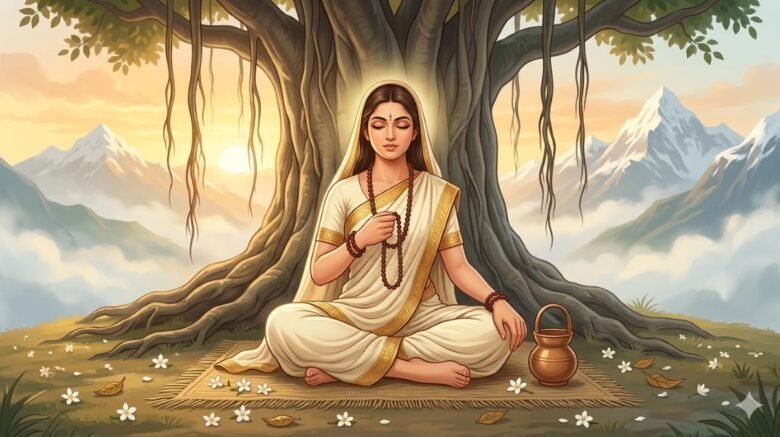
चैत्र नवरात्रि: द्वितीय दिवस विशेष
जय माता दी! 🙏
नवरात्रि का दूसरा दिन केवल एक पूजा नहीं है; यह मानवीय सीमाओं को तोड़कर 'परम चेतना' (शिव) तक पहुँचने का एक मनोवैज्ञानिक और आध्यात्मिक ब्लूप्रिंट है। जानिए प्रामाणिक कथा, योग शास्त्र और संपूर्ण वेदोक्त विधि।
'ब्रह्मचारिणी': शब्द का गूढ़ वैदिक अर्थ
आम तौर पर 'ब्रह्मचर्य' का अर्थ केवल शारीरिक संयम से जोड़ लिया जाता है, लेकिन उपनिषदों में इसका अर्थ बहुत व्यापक है।
- ब्रह्म (Brahma): वेद, तपस्या, और अनंत ब्रह्मांडीय चेतना।
- चारिणी (Charini): आचरण करने वाली, या उस मार्ग पर चलने वाली।
अर्थात, वह देवी जो अनंत चेतना (शिव) को प्राप्त करने के लिए घोर 'तप' (Penance) का आचरण करती हैं। यह स्वरूप हमें बताता है कि जीवन में बिना तपस्या (Hard Work & Focus) के कोई भी महान सिद्धि प्राप्त नहीं की जा सकती।
पौराणिक प्रमाण: जब पार्वती बनीं 'अपर्णा' (शिव महापुराण संदर्भ)
मार्कण्डेय पुराण और शिव महापुराण (पार्वती खण्ड) में माँ ब्रह्मचारिणी की तपस्या का अद्भुत वर्णन मिलता है। पूर्व जन्म में सती के रूप में देह त्यागने के बाद, देवी ने पर्वतराज हिमालय के घर 'पार्वती' के रूप में जन्म लिया। देवर्षि नारद के उपदेश से उन्हें यह ज्ञात हुआ कि शिव ही उनके शाश्वत पति हैं। शिव (परम वैरागी) को प्राप्त करने के लिए श्रृंगार नहीं, बल्कि तपस्या की आवश्यकता थी।
तपस्या के 4 अत्यंत कठोर चरण:
- प्रथम चरण (फलाहार): देवी ने एक हज़ार वर्षों तक केवल फल और मूल (कंद) खाकर जीवन व्यतीत किया।
- द्वितीय चरण (शाकाहार): अगले सौ वर्षों तक उन्होंने केवल ज़मीन पर गिरे हुए पत्ते (शाक) खाकर शिव की आराधना की। खुले आकाश के नीचे मूसलाधार बारिश और चिलचिलाती धूप का सामना किया।
- तृतीय चरण (बिल्वपत्र): इसके बाद तीन हज़ार वर्षों तक उन्होंने केवल ज़मीन पर टूट कर गिरे हुए सूखे बेलपत्र (जो शिव को प्रिय हैं) खाकर तपस्या की।
- चतुर्थ चरण (निराहार और अपर्णा): अंततः परम वैराग्य की स्थिति में आकर देवी ने सूखे पत्ते (पर्ण) खाना भी छोड़ दिया। कई हज़ार वर्षों तक वे निर्जल और निराहार रहीं। पत्तों को भी त्याग देने के कारण देवों और ऋषियों ने उन्हें 'अपर्णा' नाम दिया।
इस घोर तपस्या के कारण उनका शरीर अत्यंत क्षीण हो गया था। तब आकाशवाणी हुई कि— "हे देवी! तुम्हारी तपस्या पूर्ण हुई। शिव तुम्हें पति रूप में अवश्य प्राप्त होंगे।"
आधुनिक जीवन और योग शास्त्र: आज के युवाओं के लिए क्या सीख है?
योग शास्त्र के अनुसार, द्वितीय नवरात्रि 'स्वाधिष्ठान चक्र' (Sacral Chakra) के जागरण का दिन है।
आज के Gen-Z और युवाओं के लिए माँ ब्रह्मचारिणी की यह कथा 'Delayed Gratification' (तत्काल सुख का त्याग) और 'Dopamine Detox' का सबसे बड़ा प्राचीन उदाहरण है।
- जब हम अपने लक्ष्य (करियर, शिक्षा या स्वास्थ्य) को पाने के लिए सोशल मीडिया, जंक फूड या फालतू की बहसों (Distractions) का त्याग करते हैं, तो हम वास्तव में 'ब्रह्मचारिणी' तत्व की ही साधना कर रहे होते हैं।
- माँ का स्वरूप (एक हाथ में रुद्राक्ष, दूसरे में कमंडल) सिखाता है कि जीवन में फोकस (रुद्राक्ष) और पवित्रता/शांति (कमंडल) का संतुलन होना चाहिए।
शास्त्रीय पूजा विधि: कैसे करें माँ को प्रसन्न?
1. प्रिय रंग (Colors)
माँ ब्रह्मचारिणी सादगी की प्रतिमूर्ति हैं। आज के दिन सफेद (White) या पीला (Yellow) वस्त्र धारण करना चाहिए। यह रंग शांति, शुद्धता और मानसिक स्पष्टता (Mental Clarity) का प्रतीक है।
2. प्रिय पुष्प (Flowers)
देवी को चमेली (Jasmine), कमल या गुड़हल के फूल अत्यंत प्रिय हैं। यदि संभव हो तो पूजा में वटवृक्ष (बरगद) के पत्ते भी अर्पित करें।
3. महाभोग (Naivedya)
आज के दिन देवी को शक्कर, मिश्री, और पंचामृत का भोग लगाया जाता है। आयुर्वेदिक दृष्टि से: चैत्र मास में शरीर में पित्त (गर्मी) बढ़ने लगती है, इसलिए शक्कर और मिश्री शरीर को शीतलता प्रदान करते हैं। यह भोग परिवार के सदस्यों में आयु और सौभाग्य की वृद्धि करता है।
सिद्ध मंत्र और स्तुति (सटीक उच्चारण के साथ)
माँ ब्रह्मचारिणी का ध्यान मंत्र (Dhyana Mantra):
पूजा के आरंभ में आँखें बंद करके इस मंत्र से देवी के स्वरूप का ध्यान करें:
दधाना करपद्माभ्यामक्षमालाकमण्डलू। देवी प्रसीदतु मयि ब्रह्मचारिण्यनुत्तमा॥
(अर्थ: जिनके एक हाथ में अक्षमाला (रुद्राक्ष) और दूसरे में कमंडल है, वे सर्वोत्तम ब्रह्मचारिणी माँ मुझ पर प्रसन्न हों।)
नवदुर्गा स्तोत्र (स्तुति मंत्र):
पुष्प अर्पित करते समय इस मंत्र का 11 या 108 बार जाप करें:
या देवी सर्वभूतेषु माँ ब्रह्मचारिणी रूपेण संस्थिता। नमस्तस्यै नमस्तस्यै नमस्तस्यै नमो नमः॥
निष्कर्ष: संकल्प को शक्ति दें
अगर आप अपने जीवन में बार-बार हार मान लेते हैं, या फोकस की कमी महसूस करते हैं, तो आज का दिन आपके लिए है। माँ ब्रह्मचारिणी की साधना हमें सिखाती है कि जब इंसान का 'संकल्प' दृढ़ हो जाए, तो ब्रह्मांड की कोई भी शक्ति उसे उसका लक्ष्य (शिव) पाने से नहीं रोक सकती।
जय माँ अपर्णा! जय माँ ब्रह्मचारिणी!
सनातन ज्ञान को फैलाएं: इसे अपने व्हाट्सएप और सोशल मीडिया पर शेयर करें!
विशुद्ध और प्रामाणिक सनातन ज्ञान के लिए — PanditVerse.com



💬 Your opinion matters to us!
Did you find this article useful? Do you agree or disagree with our views? Please share your thoughts, questions, or suggestions in the comment box below. We read and look forward to every single comment!