
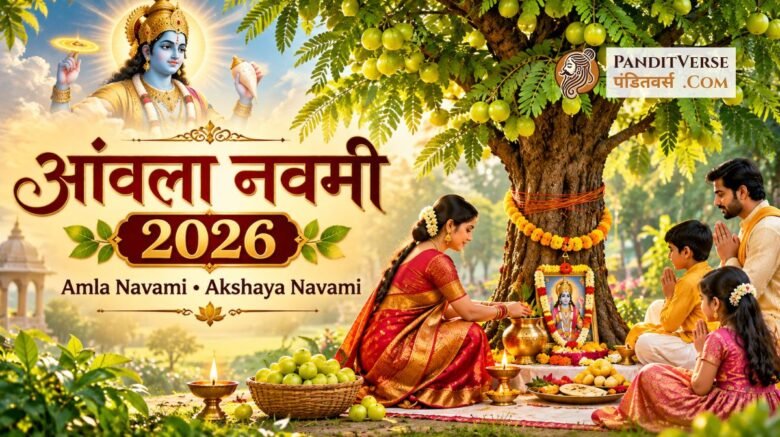
Among the many sacred observances of Kartika, there is a special day when devotees gather beneath a tree to offer prayers to the Divine. They worship its roots, decorate its trunk with sacred thread, light lamps and perform circumambulation. The tree is the amla, or Indian gooseberry tree, and the occasion is celebrated as Amla Navami.
Observed on Kartika Shukla Navami, this festival is also known as Akshaya Navami. A popular traditional story connects the day with Goddess Lakshmi, Lord Vishnu and Lord Shiva. According to this account, Goddess Lakshmi worshipped both Vishnu and Shiva beneath an amla tree and prepared a meal there. This tradition is remembered through the worship of the tree and the custom of sharing food beneath its branches.
Devotees also consider this day especially auspicious for charity, prayer, worship and other meritorious deeds. Let us explore the sacred stories, spiritual significance, rituals and traditions associated with Amla Navami.
Amla Navami 2026: Date and Puja Muhurat
In 2026, Amla Navami will be observed on Wednesday, 18 November. It falls on the ninth day of the bright fortnight of Kartika.
- Festival: Amla Navami / Akshaya Navami
- Date: 18 November 2026
- Day: Wednesday
- Hindu Month: Kartika
- Paksha: Shukla Paksha
- Navami Tithi Begins: 6:04 AM, 18 November
- Navami Tithi Ends: 7:05 AM, 19 November
- Purvahna Puja Muhurat: 6:46 AM to 12:06 PM
Note: The puja timings are based on the New Delhi Panchang. The exact timing may vary according to the local sunrise and Panchang calculations in different cities.
The Sacred Story of Amla Navami: Why Did Goddess Lakshmi Worship the Amla Tree?
A popular traditional story associated with Amla Navami describes the devotion of Goddess Lakshmi towards Lord Vishnu and Lord Shiva.
According to the story, Goddess Lakshmi once descended to the earthly realm. During her visit, she wished to worship Lord Vishnu and Lord Shiva together. She began thinking about a sacred place where she could offer prayers to both deities at the same time.
Goddess Lakshmi remembered that Tulsi is especially dear to Lord Vishnu, while Bilva leaves hold a special place in the worship of Lord Shiva. The amla tree was regarded as a sacred tree associated with the qualities of both these divine offerings.
Recognising its spiritual significance, Goddess Lakshmi chose the amla tree as the place of worship. She offered prayers to Lord Vishnu and Lord Shiva beneath its branches.
After completing the worship, Goddess Lakshmi prepared food beneath the same tree. She offered the meal to Lord Vishnu and Lord Shiva and then partook of the food herself.
The day of this divine observance was Kartika Shukla Navami. Since then, devotees have followed the tradition of worshipping the amla tree and sharing a meal beneath it on this sacred day.
This story is also why many devotees remember Lord Vishnu, Lord Shiva and Goddess Lakshmi together during Amla Navami. The tree becomes a sacred centre of worship, devotion and family prayers.
The Mythological Origin of the Amla Tree
Ancient religious traditions preserve different accounts of the origin of the amla tree. One popular Puranic account connects its appearance with the divine tears of Lord Brahma.
According to this tradition, when Brahma's eyes filled with tears of divine joy during the process of creation, the drops fell upon the earth and gave rise to the amla tree. Its origin was therefore regarded as sacred, and the tree came to be honoured in Hindu worship.
Another traditional account connects the amla tree with Samudra Manthan, the great churning of the cosmic ocean. According to this belief, drops of divine nectar fell upon the earth during the churning, giving rise to the amla tree.
These sacred accounts explain why the amla tree holds an honoured place in religious observances, particularly during the month of Kartika.
Why Is Amla Navami Called Akshaya Navami?
The word Akshaya comes from Sanskrit and means that which never diminishes or perishes. Akshaya Navami is considered an especially auspicious day for worship, charity, prayer and other meritorious deeds.
According to Hindu tradition, the spiritual merit gained through acts of charity, devotion and service on this day remains Akshaya. Devotees therefore offer food, clothes, fruits and other charitable gifts according to their means.
Akshaya Navami is also traditionally associated with the beginning of Satya Yuga. This association gives the day a special place among auspicious Yuga-related observances.
For devotees, the occasion is an opportunity to worship Lord Vishnu, perform charitable deeds and seek blessings for the well-being and prosperity of their families.
Religious Significance of Worshipping the Amla Tree
The amla tree is regarded as sacred and is closely associated with Lord Vishnu. According to traditional belief, Lord Vishnu resides in the amla tree from Kartika Shukla Navami until Kartika Purnima. Worshipping the tree during this period is therefore considered especially auspicious.
Devotees offer water at its roots, decorate its trunk with sacred thread, offer flowers and perform pradakshina. Women traditionally worship the tree while praying for family welfare, marital happiness, the well-being of children and prosperity in the household.
The Connection Between Lord Vishnu and the Amla Tree
Lord Vishnu is worshipped as the preserver and protector of the universe. The amla tree is considered one of his sacred forms of presence during this observance. Devotees offer amla fruits to Lord Vishnu and chant his sacred names while performing the worship.
Worshipping Goddess Lakshmi on Amla Navami
The story of Goddess Lakshmi worshipping beneath the amla tree gives this day a special connection with Lakshmi-Narayana worship. Devotees light lamps beneath the tree and pray to Goddess Lakshmi for prosperity, happiness, peace and abundance in their homes.
Why Do Devotees Eat Beneath the Amla Tree?
One of the most beautiful traditions of Amla Navami is preparing and sharing food beneath the amla tree.
The story of Goddess Lakshmi describes how she prepared food beneath the tree and first offered it to Lord Vishnu and Lord Shiva. Following this tradition, devotees prepare sattvic food beneath an amla tree and offer it to the Lord before sharing it with family members.
In many regions, Brahmins, guests and people in need are also offered food. Family members then sit together beneath the tree and partake of the meal as prasad.
Some households also include amla fruits or dishes prepared with amla in the meal. The tradition is observed with prayers for family happiness and the blessings of Lord Vishnu and Goddess Lakshmi.
Amla Navami Puja Vidhi
Devotees begin the day with an early morning bath and worship the amla tree with flowers, water, sacred thread and lamps. The following materials may be arranged for the puja.
Puja Samagri
- A vessel filled with clean water
- A little raw milk
- Roli, turmeric, sandalwood paste and akshata
- Flowers and garlands
- Mauli or sacred cotton thread
- Incense sticks and a diya
- Amla fruits
- Fruits, sweets and sattvic offerings
- Food, clothes or dakshina for charity
Step-by-Step Puja Vidhi
- Morning bath and sankalpa: Wake up early, take a bath and wear clean clothes. Remember Lord Vishnu and Goddess Lakshmi and take a sankalpa for the well-being of your family.
- Worship the amla tree: Clean the area around the tree and offer a respectful prayer before beginning the puja.
- Offer water and milk: Offer clean water at the roots. According to family tradition, a little raw milk may also be mixed with the water.
- Offer flowers and tilak: Apply roli, turmeric or sandalwood paste and offer flowers, garlands and akshata.
- Tie sacred thread: Wrap mauli or cotton thread around the trunk while praying for family welfare and prosperity.
- Perform pradakshina: Circumambulate the tree seven times. In some regional traditions, devotees perform 108 rounds.
- Light a diya and perform aarti: Light a lamp near the tree and offer prayers to Lord Vishnu and Goddess Lakshmi.
- Read the vrat katha: Recite or listen to the traditional Amla Navami vrat katha with devotion.
- Offer food and charity: Offer naivedya to the Lord, share a meal beneath the tree and donate food, clothes or dakshina according to your means.
Mantras to Chant on Amla Navami
Devotees may chant the following sacred mantra while worshipping Lord Vishnu:
Om Namo Bhagavate Vasudevaya.
Another mantra traditionally chanted during the worship of the amla tree is:
Om Dhatryai Namah.
After chanting, devotees pray to Lord Vishnu and Goddess Lakshmi for peace, happiness and prosperity in their families.
Charity and Donations on Akshaya Navami
Charity holds a special place in the observance of Akshaya Navami. Donating food, clothes, fruits and money according to one's means is considered auspicious. Feeding Brahmins, helping those in need and offering food to guests are also traditional acts of merit.
- Annadan: Offer food or grains to people in need.
- Vastradan: Donate clean clothes to those who need them.
- Amla Daan: Offer amla fruits as a charitable gift.
- Fruit and food donation: Distribute fruits, sweets and other food items.
- Dakshina: Offer dakshina to Brahmins and deserving people according to your means.
Amla Navami in the Sacred Month of Kartika
Kartika is considered one of the most sacred months for the worship of Lord Vishnu. Devotees observe fasting, light lamps, offer charity and perform special prayers throughout this month.
Amla Navami is followed by several important observances in the bright fortnight of Kartika. Devutthana Ekadashi celebrates the awakening of Lord Vishnu from Yoga Nidra and marks the traditional conclusion of Chaturmas. Vaikuntha Chaturdashi is dedicated to the worship of Lord Vishnu and Lord Shiva together. Kartika Purnima is celebrated as Dev Deepawali, when lamps are offered along sacred riverbanks and temples.
In 2026, Devutthana Ekadashi falls on 20 November, Vaikuntha Chaturdashi on 23 November and Kartika Purnima on 24 November.
The Spiritual Message of Amla Navami
The sacred story of Goddess Lakshmi worshipping Lord Vishnu and Lord Shiva beneath the amla tree gives this festival its devotional beauty. The worship of the tree, the lighting of lamps and the sharing of food are traditions through which devotees express their faith and gratitude.
Akshaya Navami also inspires people to follow the path of charity, devotion and service. On this auspicious day, devotees worship Lord Vishnu and Goddess Lakshmi, offer food to those in need and pray for the happiness and well-being of their families.
May the blessings of Shri Hari and Goddess Lakshmi bring peace, happiness and prosperity into every home. Heartfelt wishes on Amla Navami!




💬 Your opinion matters to us!
Did you find this article useful? Do you agree or disagree with our views? Please share your thoughts, questions, or suggestions in the comment box below. We read and look forward to every single comment!