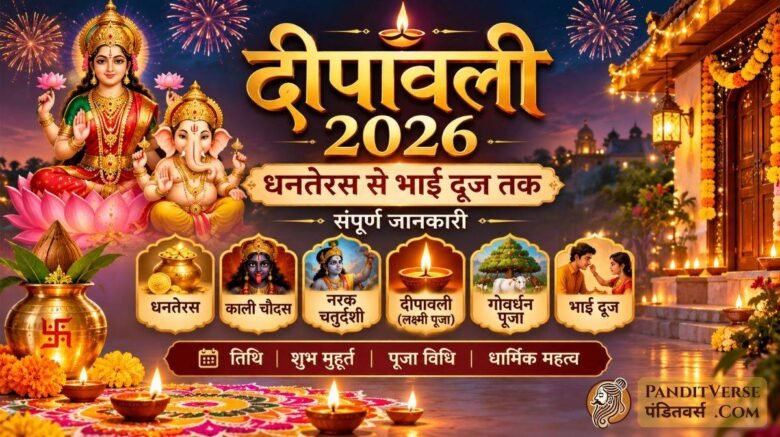
Diwali is far more than a single evening of lighting lamps. It is a festival season in which homes glow with diyas, families gather for worship, sweets are exchanged, and ancient Sanatan traditions come alive. Beginning with Dhanteras and continuing through Bhai Dooj, the festival brings together the blessings of health, prosperity, spiritual illumination, gratitude, devotion and family love.
Each day of the Diwali celebrations has its own significance. Dhanteras honours Lord Dhanvantari and the importance of health. Naraka Chaturdashi celebrates the destruction of evil. Diwali is associated with Goddess Lakshmi, Lord Ganesha and the triumph of light over darkness. Govardhan Puja expresses gratitude towards nature, while Bhai Dooj celebrates the sacred bond between brothers and sisters.
In 2026, Diwali will be celebrated on Sunday, 8 November. Interestingly, Naraka Chaturdashi's Abhyanga Snan and the main Lakshmi Puja will take place on the same date. Govardhan Puja falls on 10 November, followed by Bhai Dooj on 11 November. This year, the major observances do not fall on five consecutive calendar dates.
Diwali 2026 Calendar: Dhanteras to Bhai Dooj
- Dhanteras: Friday, 6 November 2026
- Kali Chaudas: Saturday night, 7 November 2026
- Naraka Chaturdashi / Choti Diwali: Sunday, 8 November 2026
- Diwali / Lakshmi Puja: Sunday, 8 November 2026
- Govardhan Puja / Annakut: Tuesday, 10 November 2026
- Bhai Dooj: Wednesday, 11 November 2026
Important: In 2026, Amavasya begins on 8 November and continues until approximately midday on 9 November. Since Amavasya is present during the evening Pradosh period on 8 November, Lakshmi Puja will be observed that evening. Govardhan Puja is celebrated on 10 November because the relevant Pratipada sunrise falls on that date.
1. Dhanteras 2026: The Festival of Wealth and Health
Date: Friday, 6 November 2026
Dhanteras Puja Muhurat: 6:03 PM to 7:58 PM (New Delhi)
Lord Dhanvantari and the Story of Samudra Manthan
Dhanteras, also known as Dhantrayodashi, marks the beginning of the Diwali festivities. It is celebrated on the thirteenth lunar day of Krishna Paksha in the month of Kartika and is associated with Lord Dhanvantari, Goddess Lakshmi and Lord Kubera.
According to the traditional account of Samudra Manthan, the cosmic churning of the ocean, Lord Dhanvantari emerged from the ocean carrying a pot of Amrita, the divine nectar of immortality. He is revered as the divine physician and associated with the origin of Ayurveda.
This association gives Dhanteras a meaning deeper than material wealth. It is also a day to honour health, longevity and well-being. In the Indian spiritual tradition, health is regarded as one of life's greatest treasures, without which prosperity cannot be fully enjoyed.
Why Do People Buy Gold and Utensils on Dhanteras?
Buying gold, silver, utensils or useful household items on Dhanteras is a widely followed tradition. Such purchases are regarded as auspicious beginnings and symbols of prosperity. Many families buy a new metal vessel, a silver coin or an item needed for their home.
However, Dhanteras is not merely a shopping festival. Cleaning the home, offering prayers, lighting lamps and seeking blessings for good health are equally meaningful parts of the observance.
Dhanteras Puja Vidhi
- Clean the home and prepare a sacred space for worship.
- Remember and worship Lord Dhanvantari, Goddess Lakshmi and Lord Kubera.
- Offer flowers, rice grains, fruits, sweets and a diya.
- Chant the traditional Dhanvantari mantra.
- In the evening, light a lamp outside the home in honour of Yama.
Lord Dhanvantari Mantra:
Om Namo Bhagavate Vasudevaya Dhanvantaraye Amritakalasha Hastaya Sarvamaya Vinashaya Trailokyanathaya Shri Mahavishnave Namah.
Yama Deepam: The Lamp for Lord Yama
Lighting a lamp for Lord Yama on the evening of Dhanteras is a traditional observance known as Yama Deepam. In many households, a lamp is placed outside the home facing the southern direction. It is offered as a prayer for protection, well-being and freedom from untimely death.
The lamp symbolises a prayer for life, protection and auspiciousness. It reminds devotees that prosperity is meaningful when accompanied by health, safety and gratitude.
2. Kali Chaudas 2026: A Night of Divine Protection
Date: Saturday night, 7 November 2026
Kali Chaudas is particularly observed in Gujarat and certain western Indian traditions. It is associated with the night before Naraka Chaturdashi and, in some traditions, with the worship of Goddess Kali or Lord Bhairava.
The spiritual theme of Kali Chaudas is the overcoming of fear, darkness and negative tendencies. Goddess Kali represents divine power that destroys ignorance, injustice and destructive forces.
Some regional traditions include special night worship, lamps and spiritual practices. Tantric rituals are distinct from ordinary household worship and should be undertaken only under proper guidance.
3. Naraka Chaturdashi 2026: Choti Diwali and the Victory over Narakasura
Date: Sunday, 8 November 2026
Abhyanga Snan Muhurat: 5:37 AM to 6:38 AM (New Delhi)
The Story of Narakasura
Naraka Chaturdashi, popularly known as Choti Diwali, commemorates the destruction of the demon Narakasura by Lord Krishna. The festival symbolises the victory of righteousness over oppression and evil.
According to the traditional account, Narakasura became a tyrant and imprisoned many women while troubling the gods and other beings. Lord Krishna, accompanied by his wife Satyabhama, eventually defeated the demon and liberated the captives.
The destruction of Narakasura is remembered as the end of cruelty and the restoration of freedom. This is why Naraka Chaturdashi is associated with purification, light and celebration.
The Tradition of Abhyanga Snan
One of the most distinctive rituals of Naraka Chaturdashi is Abhyanga Snan, the traditional oil bath performed before sunrise. Devotees apply oil to the body before bathing, and some regional customs include fragrant preparations and herbal pastes.
According to religious belief, this bath symbolises purification and freedom from negative tendencies. Its deeper spiritual meaning lies in beginning the day with renewed discipline, clarity and a sense of inner cleanliness.
Naraka Chaturdashi Rituals
- Perform Abhyanga Snan before sunrise.
- Remember and worship Lord Krishna.
- Light diyas at the entrance of the home.
- Share sweets and prasad with family members.
- Celebrate responsibly while avoiding excessive noise and pollution.
Choti Diwali reminds us that victory is not limited to defeating external enemies. The deeper triumph is overcoming anger, greed, pride and other destructive tendencies within ourselves.
4. Diwali 2026: Goddess Lakshmi and the Festival of Lights
Date: Sunday, 8 November 2026
Lakshmi Puja Muhurat: 5:55 PM to 7:51 PM (New Delhi)
Pradosh Kaal: 5:31 PM to 8:09 PM
Amavasya Tithi: Approximately 11:27 AM on 8 November to 12:31 PM on 9 November
What Does Deepavali Mean?
The word Deepavali is formed from two Sanskrit words: Deepa, meaning lamp, and Avali, meaning a row. Deepavali therefore means a row of lamps or a series of lights.
On the dark night of Kartika Amavasya, countless lamps illuminate homes, temples and streets. This beautiful tradition represents the triumph of light over darkness and knowledge over ignorance.
Lord Rama's Return to Ayodhya
In North Indian tradition, Diwali is closely associated with the return of Lord Rama to Ayodhya. According to the Ramayana tradition, Lord Rama completed fourteen years of exile and returned to his kingdom with Goddess Sita and Lakshmana after defeating Ravana.
The people of Ayodhya welcomed their beloved king by lighting lamps. This tradition gives Diwali a profound connection with righteousness, justice, devotion and the victory of dharma.
However, Diwali's religious traditions are not limited to the Ramayana. The appearance of Goddess Lakshmi during Samudra Manthan, the worship of Lord Vishnu and various regional traditions also contribute to the spiritual richness of the festival.
Why Is Goddess Lakshmi Worshipped on Diwali?
Goddess Lakshmi is revered as the deity of wealth, prosperity, fortune and abundance. Her appearance during the cosmic churning of the ocean is one of the major Puranic traditions associated with Diwali worship.
On Diwali night, devotees worship Goddess Lakshmi along with Lord Ganesha. Lakshmi represents prosperity and abundance, while Ganesha represents wisdom, discernment and the removal of obstacles. Their combined worship expresses the desire for wealth guided by wisdom and righteous conduct.
Some traditions also include the worship of Goddess Saraswati and Lord Kubera. Among business communities, account-book worship and the beginning of a new financial cycle hold special significance.
Diwali Lakshmi Puja Vidhi
- Clean the home and prepare the place of worship.
- Install images or idols of Goddess Lakshmi and Lord Ganesha.
- Prepare a Kalash with water, rice grains, betel nut and mango leaves.
- Begin the worship with Lord Ganesha.
- Offer flowers, rice grains, incense, lamps, sweets and fruits to Goddess Lakshmi.
- Chant the Lakshmi mantra and perform the family aarti.
- Light diyas at the entrance, courtyard and other appropriate places.
- Distribute prasad and offer charity to those in need.
Goddess Lakshmi Mantra
Om Shreem Mahalakshmyai Namah.
The Spiritual Meaning of Lighting Diyas
Lighting lamps on Diwali is not simply a decorative tradition. In Indian philosophy, light symbolises knowledge, consciousness and wisdom, while darkness represents ignorance and confusion.
Every diya becomes a reminder to cultivate truth, compassion and righteousness in our lives. The real message of Diwali is not merely to illuminate our homes but also to remove the darkness within our own minds.
5. Govardhan Puja 2026: Lord Krishna and Gratitude towards Nature
Date: Tuesday, 10 November 2026
Morning Puja Muhurat: 6:40 AM to 8:50 AM (New Delhi)
Afternoon Puja Muhurat: 3:20 PM to 5:30 PM (New Delhi)
The Story of Govardhan Mountain
Govardhan Puja commemorates the divine leela of Lord Krishna in which he protected the people of Braj from the wrath of Indra.
According to the Bhagavata Purana, the people of Braj traditionally worshipped Indra for rainfall and agricultural prosperity. Young Krishna encouraged them to recognise their dependence on Govardhan Mountain, cattle and nature, and to express gratitude towards the natural world.
The people followed Krishna's advice and worshipped Govardhan. Angered by this, Indra unleashed torrential rain upon Braj. Lord Krishna lifted Govardhan Mountain on his little finger, providing shelter to the people and cattle beneath it.
Eventually, Indra recognised his mistake and acknowledged Krishna's divine greatness.
The Message of Govardhan Puja
Govardhan Puja teaches gratitude towards nature, cattle, food and the resources that sustain life. Krishna's leela reminds us that protecting the natural world is essential to the well-being of society.
The festival also represents humility and collective responsibility. The people of Braj found protection together beneath Govardhan, making the story a powerful symbol of unity and care.
Govardhan Puja and Annakut
Annakut is a traditional offering of a variety of food preparations to the deity. The word Annakut means a mountain or collection of food. Temples prepare numerous dishes and offer them to the Lord before distributing them as prasad.
This tradition expresses gratitude for food, respect for agricultural abundance and the importance of sharing nourishment within the community.
Govardhan Puja Vidhi
- Create a symbolic Govardhan Mountain using cow dung or earth, according to local tradition.
- Offer flowers, rice grains and lamps.
- Worship Lord Krishna with devotion.
- Offer Annakut and various food preparations.
- Perform Govardhan Parikrama where the tradition is followed.
- Distribute prasad and undertake acts of charity or cow service.
6. Bhai Dooj 2026: Celebrating the Sacred Bond of Siblings
Date: Wednesday, 11 November 2026
Tilak Muhurat: 1:10 PM to 3:20 PM (New Delhi)
The Story of Yama and Yamuna
Bhai Dooj is also known as Yama Dwitiya. The festival is associated with the traditional story of Yama, the lord of death, and his sister Yamuna.
According to the popular legend, Yamuna invited her brother Yama to her home and welcomed him with affection and hospitality. Pleased by her love, Yama granted her a blessing associated with the well-being and longevity of brothers who receive their sisters' blessings on this day.
This tradition forms the basis of Bhai Dooj celebrations. Sisters apply a tilak on their brothers' foreheads and pray for their happiness, health and long life. Brothers express affection and respect by offering gifts and strengthening their bond with their sisters.
Bhai Dooj Puja Vidhi
- Prepare a puja thali containing roli, rice grains, a diya, sweets and flowers.
- Invite the brother to sit in an auspicious place.
- Apply tilak on his forehead and offer prayers for his well-being.
- Perform aarti and offer sweets or a meal.
- The brother presents a gift to his sister as an expression of love and respect.
Bhai Dooj is more than a religious ritual. It is an opportunity to nurture love, protection, respect and family unity.
The Spiritual Meaning of the Diwali Festival Days
The celebrations from Dhanteras to Bhai Dooj bring together different aspects of spiritual and family life.
- Dhanteras: Respect for health and prosperity.
- Naraka Chaturdashi: Victory over evil and negative tendencies.
- Diwali: The journey from darkness to light and ignorance to wisdom.
- Govardhan Puja: Gratitude towards nature, food and cattle.
- Bhai Dooj: Love, family bonds and mutual respect.
How to Celebrate Diwali Responsibly
- Keep the home and worship area clean.
- Perform worship with sincerity and simplicity.
- Worship Lord Ganesha along with Goddess Lakshmi.
- Keep diyas in safe locations and protect children from fire.
- Avoid excessive fireworks and consider the environment and animals.
- Donate food, clothing or useful items to people in need.
- Strengthen relationships through kindness, harmony and cooperation.
Diwali 2026: Frequently Asked Questions
When is Diwali in 2026?
Diwali will be celebrated on Sunday, 8 November 2026.
When is Dhanteras in 2026?
Dhanteras falls on Friday, 6 November 2026.
When is Choti Diwali in 2026?
Naraka Chaturdashi or Choti Diwali's Abhyanga Snan will take place on the morning of 8 November 2026. The Kali Chaudas night observance falls on 7 November.
What is the Lakshmi Puja Muhurat for Diwali 2026?
For New Delhi, the Lakshmi Puja Muhurat is from 5:55 PM to 7:51 PM on 8 November 2026. Timings may vary according to the local Panchang.
When is Govardhan Puja in 2026?
Govardhan Puja will be celebrated on Tuesday, 10 November 2026.
When is Bhai Dooj in 2026?
Bhai Dooj will be celebrated on Wednesday, 11 November 2026.
May the Light of Diwali Awaken Within Us
The lamps of Diwali remind us that light should illuminate not only our homes and temples but also our thoughts and actions. Dhanteras teaches the value of health, Naraka Chaturdashi celebrates the victory of righteousness, Lakshmi Puja inspires wise prosperity, Govardhan Puja encourages gratitude towards nature, and Bhai Dooj strengthens the bonds of family love.
When these celebrations are observed with their deeper spiritual meanings, Diwali becomes more than a festival. It becomes an opportunity to renew our commitment to a better, more compassionate and more meaningful life.
May Goddess Lakshmi and Lord Shri Ganesha bless you and your family with health, peace, wisdom, happiness and prosperity. Wishing everyone a joyful Dhanteras, Naraka Chaturdashi, Diwali, Govardhan Puja and Bhai Dooj. Shubh Deepavali!


💬 Your opinion matters to us!
Did you find this article useful? Do you agree or disagree with our views? Please share your thoughts, questions, or suggestions in the comment box below. We read and look forward to every single comment!