Kartik Purnima 2026: Date and Auspicious Timings
In 2026, Kartik Purnima will be observed on Tuesday, 24 November. Devotees will perform the sacred Kartik Snan in the early morning, worship Lord Vishnu and Lord Shiva during the day, and offer lamps in the evening. The grand celebration of Dev Deepawali will also take place in Kashi that evening.
- Kartik Purnima: Tuesday, 24 November 2026
- Purnima Tithi Begins: 11:42 PM, 23 November
- Purnima Tithi Ends: 8:23 PM, 24 November
- Brahma Muhurat: 5:03 AM to 5:57 AM, 24 November (New Delhi)
- Moonrise: 5:01 PM (New Delhi)
- Dev Deepawali Deep Daan Muhurat: 5:08 PM to 7:47 PM (Varanasi)
The early morning hours are considered especially suitable for the sacred Kartik Snan, while lamps are offered in the evening. In Varanasi, devotees illuminate the ghats of the Ganga as part of the Dev Deepawali celebration.
Note: Brahma Muhurat and moonrise timings are based on the New Delhi Panchang, while the Deep Daan timing is for Varanasi. Sunrise, moonrise and Pradosh timings may differ in other cities. Follow your local Panchang for location-specific timings.
The Story of Kartik Purnima: How Lord Shiva Destroyed Tripurasura with a Single Arrow
On the full moon night of Kartik, the sky shines with the brilliance of the moon while countless lamps illuminate the earth. River ghats, temples, courtyards and homes glow with rows of diyas. In Kashi, thousands of lamps are lit along the banks of the Ganga, creating the magnificent celebration known as Dev Deepawali.
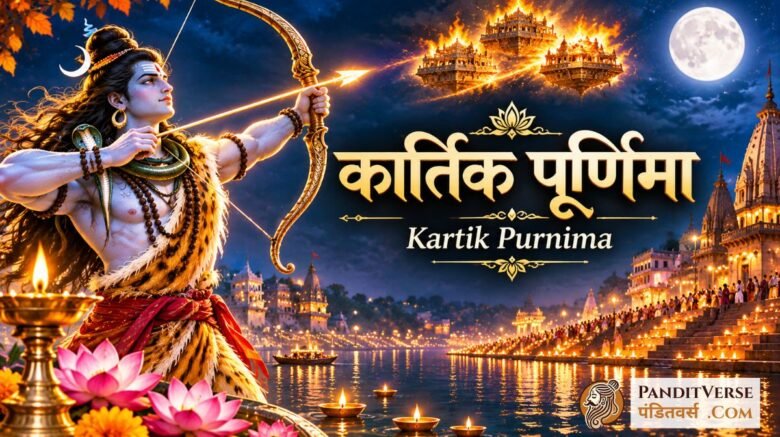
Yet Kartik Purnima is much more than a festival of lights. It is associated with the legendary victory of Lord Shiva over Tripurasura, when Mahadeva destroyed three mighty cities with a single arrow. This victory gave Shiva the name Tripurari, and the full moon is also remembered as Tripurari Purnima.
The day is marked by sacred bathing, charity, worship of Lord Vishnu and Lord Shiva, and the offering of lamps. Devotees welcome the full moon with prayers and seek the light of dharma and wisdom in their lives.
The Three Cities of Tripura and Brahma's Boon
The story of Tripurasura is described in the Yuddha Khanda of the Rudra Samhita in the Shiva Purana. After the death of Tarakasura, his three sons—Tarakaksha, Kamalaksha and Vidyunmali—resolved to gain extraordinary power. They performed severe penance and pleased Lord Brahma.
When Brahma offered them a boon, the three Asuras asked for magnificent cities that would be extremely difficult to destroy. According to their request, three extraordinary cities were created: one of gold in heaven, one of silver in the sky and one of iron on earth. Together, these three cities came to be known as Tripura.
The divine architect Maya constructed these cities. They were magnificent and powerful, moving through their respective realms. They would align in a single line only at a rare appointed moment. The boon stated that they could be destroyed only when all three cities aligned and a mighty archer struck them with a single arrow.
After receiving this boon, the Asuras grew increasingly arrogant. Their pride turned into oppression, and they began troubling the gods, sages and inhabitants of the three worlds. Unable to bear their cruelty, the gods approached Brahma and Vishnu and eventually sought refuge in Lord Shiva.
The Gods Seek Lord Shiva's Protection
The gods described the suffering caused by Tripurasura and prayed to Mahadeva to protect the three worlds. Lord Shiva heard their appeal and resolved to destroy the three cities.
However, this was no ordinary battle. The cities had to align at the same moment, and they could be destroyed only by a single arrow. The gods therefore prepared an extraordinary divine chariot for Shiva, incorporating elements of the cosmos itself.
When the Entire Universe Became Shiva's Divine Chariot
The chariot prepared for the destruction of Tripura was unlike anything seen before. The Earth became the chariot, while the Sun and Moon served as its wheels. Lord Brahma became the charioteer, Mount Meru became the bow, and Vasuki, the serpent king, became the bowstring.
Lord Vishnu took the form of the arrow, while Agni became its fiery tip. Thus, the powers of the universe came together for the divine mission of Lord Shiva.
Seated upon this celestial chariot, Shiva advanced towards the three cities. The gods, sages and Siddhas waited for the rare moment when the cities would align.
Lord Shiva Destroys the Three Cities with One Arrow
At last, the three cities came into a single line. This was the very moment upon which the Asuras' boon depended. Lord Shiva drew his divine bow and released a single arrow. In an instant, all three cities were reduced to ashes.
The pride of Tripurasura came to an end, and the three worlds were freed from the oppression of the Asuras. The gods rejoiced and praised Mahadeva for restoring peace and dharma.
Since Lord Shiva destroyed the three cities of Tripura, he came to be known as Tripurari and Tripurantaka. Hindu tradition associates this victory with Kartik Purnima, giving the day its other name, Tripurari Purnima.
Why Is Dev Deepawali Celebrated?
According to religious belief, after Shiva's victory over Tripurasura, the gods celebrated the occasion by lighting lamps in Kashi. Dev Deepawali, meaning the Diwali of the gods, is observed in remembrance of this divine celebration on Kartik Purnima.
In Varanasi, the ghats of the Ganga are illuminated with countless lamps. Dashashwamedh Ghat, Assi Ghat and other riverfront steps become radiant with rows of diyas. Temples hold special worship, and the Ganga Aarti becomes a magnificent expression of devotion.
The spiritual beauty of Dev Deepawali lies in celebrating Shiva's victory through light. By offering lamps, devotees pray for the removal of ignorance, ego and negativity from their lives.
The Significance of the Sacred Bath on Kartik Purnima
The month of Kartik is traditionally associated with bathing before sunrise. The month-long Kartik Snan concludes on Kartik Purnima, when devotees take a sacred bath in rivers such as the Ganga, Yamuna, Godavari, Narmada and Kaveri.
Those who cannot visit a river or pilgrimage site may bathe at home after adding a few drops of Ganga water and remembering the sacred rivers. After the bath, devotees worship Lord Vishnu and Lord Shiva and offer charity according to their means.
The significance of Kartik Snan goes beyond physical cleansing. Rising early, maintaining discipline, remembering the Divine and following a sattvic way of life throughout the month are considered meaningful forms of spiritual practice. Kartik Purnima marks the culmination of this observance.
The Importance of Deep Daan on Kartik Purnima
Offering lamps is one of the central rituals of Kartik Purnima. Devotees light diyas in temples, near rivers, beside Tulsi plants and at the entrances of their homes. In many regions, lamps are also set afloat on rivers during the evening.
The flame of a lamp represents knowledge, auspiciousness and divine grace in Hindu tradition. Devotees who have offered lamps throughout Kartik perform special Deep Daan on the full moon day.
The tradition of Akash Deep is also associated with the month of Kartik. A lamp or lantern is placed high above the ground, often on a tall bamboo pole or a raised structure. It is offered with reverence in remembrance of the Divine and the ancestors. The exact method may vary across regions and family traditions.
Worship of Lord Vishnu on Kartik Purnima
Kartik is regarded as a particularly dear month to Lord Vishnu. Tulsi worship, prayers to Lord Damodara and the offering of lamps are important observances throughout the month. On Kartik Purnima, many devotees also perform Satyanarayan Puja and listen to the Satyanarayan Katha.
Devotees offer yellow flowers, Tulsi leaves, fruits and naivedya to Lord Vishnu. Families may organise the Satyanarayan Puja at home, listen to the sacred account and distribute prasad. They pray for peace, prosperity and the strength to follow the path of dharma.
Kartik Purnima Puja Vidhi
Kartik Purnima is observed through sacred bathing, charity, Deep Daan and the worship of Lord Vishnu and Lord Shiva. Devotees may follow their family traditions. A simple form of worship includes the following steps:
- Pre-dawn sacred bath: Wake up early and bathe in a sacred river if possible. Otherwise, add a few drops of Ganga water to your bathing water and remember the holy rivers.
- Sankalpa: Wear clean clothes after bathing and resolve to perform worship and charity with devotion.
- Offer Arghya to the Sun: Offer water to the rising Sun and pray for the well-being of your family.
- Worship Lord Vishnu: Offer yellow flowers, Tulsi leaves, fruits, naivedya, incense and a lamp. Recite the Vishnu Sahasranama or listen to the Satyanarayan Katha.
- Worship Lord Shiva: Offer water and milk to the Shiva Lingam. Offer Bilva leaves, flowers, dhatura and sandal paste while chanting Om Namah Shivaya.
- Deep Daan: In the evening, light lamps at home, in temples, beside Tulsi plants and near rivers wherever possible.
- Charity: Donate food, clothes, sesame seeds, ghee or useful items to those in need according to your capacity.
- Offer water to the Moon: After moonrise, offer water to Chandra and pray for peace and well-being.
Important Mantras for Kartik Purnima
Panchakshara Mantra of Lord Shiva
ॐ नमः शिवाय॥
This is the sacred Panchakshara Mantra of Lord Shiva. Devotees chant it while remembering Mahadeva as Tripurari.
Dwadashakshara Mantra of Lord Vishnu
ॐ नमो भगवते वासुदेवाय॥
This is the celebrated twelve-syllable mantra of Lord Vishnu, recited by devotees during the worship of Shri Hari.
Ganga Remembrance Mantra
गङ्गे च यमुने चैव गोदावरि सरस्वति।
नर्मदे सिन्धु कावेरि जलेऽस्मिन् सन्निधिं कुरु॥
Meaning: O Ganga, Yamuna, Godavari, Saraswati, Narmada, Sindhu and Kaveri, may your sacred presence bless this water.
The Importance of Charity on Kartik Purnima
Kartik Purnima is regarded as an auspicious day for charity. Offering food, clothes, sesame seeds, ghee, lamps and useful daily necessities to those in need is considered meritorious. Charity performed after the sacred bath holds a special place in the religious observance of this day.
The true spirit of charity lies in bringing relief and support to others. Giving with humility and compassion, according to one's means, makes the observance meaningful.
The Spiritual Message of Kartik Purnima
The story of Tripurasura teaches that pride and the misuse of power eventually lead to destruction. Lord Shiva's single arrow does more than destroy three cities; it represents the victory of dharma over arrogance and injustice.
The lamps lit on Kartik Purnima recall this victory and offer a reminder to look within. Just as a lamp removes darkness from its surroundings, wisdom and devotion help remove ignorance, anger, greed and ego from the human heart.
On this sacred full moon, may Lord Tripurari remove the darkness within us and fill our lives with the light of knowledge, devotion and righteous conduct. Har Har Mahadev!

💬 Your opinion matters to us!
Did you find this article useful? Do you agree or disagree with our views? Please share your thoughts, questions, or suggestions in the comment box below. We read and look forward to every single comment!